I took the test twice and got the same score. I'm not sure I agree with being true neutral but it is all in good fun.
I Am A: True Neutral Human Sorcerer (5th Level)
Ability Scores:
Strength-12
Dexterity-12
Constitution-10
Intelligence-14
Wisdom-14
Charisma-13
Alignment:
True Neutral A true neutral character does what seems to be a good idea. He doesn't feel strongly one way or the other when it comes to good vs. evil or law vs. chaos. Most true neutral characters exhibit a lack of conviction or bias rather than a commitment to neutrality. Such a character thinks of good as better than evil after all, he would rather have good neighbors and rulers than evil ones. Still, he's not personally committed to upholding good in any abstract or universal way. Some true neutral characters, on the other hand, commit themselves philosophically to neutrality. They see good, evil, law, and chaos as prejudices and dangerous extremes. They advocate the middle way of neutrality as the best, most balanced road in the long run. True neutral is the best alignment you can be because it means you act naturally, without prejudice or compulsion. However, true neutral can be a dangerous alignment because it represents apathy, indifference, and a lack of conviction.
Race:
Humans are the most adaptable of the common races. Short generations and a penchant for migration and conquest have made them physically diverse as well. Humans are often unorthodox in their dress, sporting unusual hairstyles, fanciful clothes, tattoos, and the like.
Class:
Sorcerers are arcane spellcasters who manipulate magic energy with imagination and talent rather than studious discipline. They have no books, no mentors, no theories just raw power that they direct at will. Sorcerers know fewer spells than wizards do and acquire them more slowly, but they can cast individual spells more often and have no need to prepare their incantations ahead of time. Also unlike wizards, sorcerers cannot specialize in a school of magic. Since sorcerers gain their powers without undergoing the years of rigorous study that wizards go through, they have more time to learn fighting skills and are proficient with simple weapons. Charisma is very important for sorcerers; the higher their value in this ability, the higher the spell level they can cast.
Find out What Kind of Dungeons and Dragons Character Would You Be?, courtesy of Easydamus (e-mail)

Wednesday, October 15, 2008


Monday, October 13, 2008
D&D + a non-gamers POV = 4e?
I was having a discussion about D&D with a non gamer acquaintance of mine the other day and discovered something interesting. His idea of what D&D is like resembles 4e a great deal. At least in a general sense.
His only exposure to the game is some reruns of the old cartoon on cable and the Dungeons & Dragons movie, the one with the Wayans brother, so edition wars and things of that nature played no part in our discussion. He had seen Lord of the Rings, but wasn't a fan and prefers Madden to World of Warcraft. So while LotR and WoW both may have had some influence on his opinion I don't think it was substantial. His knowledge of table top roleplaying games is so limited that he didn't even know there were multiple editions, or even that any RPGs existed besides D&D.
I'm not really sure what got us on the topic, but he started asking me questions about how the game is played, what the purpose of the game was and why I played. After explaining myself and the game in very general terms I asked him what he thought and knew about D&D.
His idea of D&D consisted basically of a a game of superheroes living in the middle ages. He didn't know that you rolled up your own PC, but assumed you chose one of several characters that came straight from the book. According to his view these characters were like those in movies, super strong and nearly indestrucible fighters accompanied by godlike magic users who fought dragons and demons. Every character had some kind of power and super powerful weapons. Now this may not be too far from the truth, but the level of power he was talking about was more along the lines of Superman than Conan.
As our conversation continued, with me correcting several of his misconceptions, it hit me that what he described was incredibly similar to D&D 4e. Characters with incredible powers and magic weapons aplenty fighting horrible monsters sounds like a 4e game to me.
After thinking about this a little more I actually could see the broader appeal of 4e. To people who don't play the game, 4e gives them what some non-gamers may expect from the game. As a long time D&D player I like 4e but agree with many of my fellow gamers that it doesn't feel like D&D to me. As a system it is solid and fun to play, but it seems off when labeled as D&D. However, from the perspective of an "outsider" 4e would be pretty much what they envisioned the game to be.
None of this proves or disproves the worth of 4e, but it did give me a little something to think about.
His only exposure to the game is some reruns of the old cartoon on cable and the Dungeons & Dragons movie, the one with the Wayans brother, so edition wars and things of that nature played no part in our discussion. He had seen Lord of the Rings, but wasn't a fan and prefers Madden to World of Warcraft. So while LotR and WoW both may have had some influence on his opinion I don't think it was substantial. His knowledge of table top roleplaying games is so limited that he didn't even know there were multiple editions, or even that any RPGs existed besides D&D.
I'm not really sure what got us on the topic, but he started asking me questions about how the game is played, what the purpose of the game was and why I played. After explaining myself and the game in very general terms I asked him what he thought and knew about D&D.
His idea of D&D consisted basically of a a game of superheroes living in the middle ages. He didn't know that you rolled up your own PC, but assumed you chose one of several characters that came straight from the book. According to his view these characters were like those in movies, super strong and nearly indestrucible fighters accompanied by godlike magic users who fought dragons and demons. Every character had some kind of power and super powerful weapons. Now this may not be too far from the truth, but the level of power he was talking about was more along the lines of Superman than Conan.
As our conversation continued, with me correcting several of his misconceptions, it hit me that what he described was incredibly similar to D&D 4e. Characters with incredible powers and magic weapons aplenty fighting horrible monsters sounds like a 4e game to me.
After thinking about this a little more I actually could see the broader appeal of 4e. To people who don't play the game, 4e gives them what some non-gamers may expect from the game. As a long time D&D player I like 4e but agree with many of my fellow gamers that it doesn't feel like D&D to me. As a system it is solid and fun to play, but it seems off when labeled as D&D. However, from the perspective of an "outsider" 4e would be pretty much what they envisioned the game to be.
None of this proves or disproves the worth of 4e, but it did give me a little something to think about.
Wednesday, October 8, 2008
What Happened to the Big Events?
I don't know whether I have just gotten old, or if years of hype have just made me jaded, but I am not impressed with DC and Marvel's big events this year. I liked Civil War, the various Crisis stories were ok and even enjoyed 52, Countdown... not so much, but Final Crisis & Secret Invasion are just boring me.
I picked up the first 3 issues of Secret Invasion and while I'm not saying that the story completely sucked, I just didn't "feel it". I didn't really care, which happens more and more with me and Marvel books these days. Granted I have always been more of a DC guy, but I still have my favorite Marvel characters and with those few exceptions I just couldn't care less about this event. As far as I'm concerned it isn't even happening.
Now as for DC, my comic book company of choice, I am waaaay underwhelmed with Final Crisis. The only joy I've gotten out of it so far is the fact that Martian Manhunter is finally out of the picture, at least for a while( I can't explain it, I just don't like the character). As a matter of fact I enjoyed the Sinestro Corps from last year a lot more. I'm especially looking forward to the Blackest/Darkest Night storyline coming next year. Maybe it is due to the fact I have never liked or cared about the New Gods, or the fact they are wearing out the Crisis theme, but Final Crisis isn't anymore interesting to me than what Marvel is doing this summer. Honestly, the biggest events that have been happening at either company have been in the individual books themselves.
The death and replacement of Captain America has been a great story line. The previously mentioned Sinsestro Corps was fantastic and the Hulk has been pretty good ever since the Planet Hulk story... well mostly anyway. As for the big events in Spiderman...as far as I'm concerned Spidey's books quit being published and he is now nothing more than a movie franchise to me(the books are dead to me, though Spidergirl & Ultimate Spidey are kind of fun). At least until they decide to re-reverse the mess they have made of that continuity/character. Don't even get me started on Batman. They should just kill him and get it over with, the movies are better than the series at this point anyway.
So maybe I am jaded and cynical after many, many years of reading comics. Maybe I've just seen the same stories done over and over enough times that I quit caring. In that time I've seen worlds destroyed and remade, characters marry, divorce, die and return from the dead. The sad part is that most of those stories involve the same few characters.
There has been debate for years over what "age" of comics we are in now... Bronze, Lead, Copper, Pewter.... actually I don't even care I just want to read good books, with good stories and it seems we are hitting a bit of slup once again. (Though I will give companies like Image and Dynamite cred for doing some really good stuff. )I think that instead of rehasing the same things over and over again with the same characters it might just be time to let the old guard step down. When the Silver Age hit it brought with it the next generation of characters and maybe that is what comic books need right now. Maybe it is time for the sidekicks and kids to step up, continue the legacy and take their place as the new generation of heroes. Or maybe I'm just getting old and grumpy.
I picked up the first 3 issues of Secret Invasion and while I'm not saying that the story completely sucked, I just didn't "feel it". I didn't really care, which happens more and more with me and Marvel books these days. Granted I have always been more of a DC guy, but I still have my favorite Marvel characters and with those few exceptions I just couldn't care less about this event. As far as I'm concerned it isn't even happening.
Now as for DC, my comic book company of choice, I am waaaay underwhelmed with Final Crisis. The only joy I've gotten out of it so far is the fact that Martian Manhunter is finally out of the picture, at least for a while( I can't explain it, I just don't like the character). As a matter of fact I enjoyed the Sinestro Corps from last year a lot more. I'm especially looking forward to the Blackest/Darkest Night storyline coming next year. Maybe it is due to the fact I have never liked or cared about the New Gods, or the fact they are wearing out the Crisis theme, but Final Crisis isn't anymore interesting to me than what Marvel is doing this summer. Honestly, the biggest events that have been happening at either company have been in the individual books themselves.
The death and replacement of Captain America has been a great story line. The previously mentioned Sinsestro Corps was fantastic and the Hulk has been pretty good ever since the Planet Hulk story... well mostly anyway. As for the big events in Spiderman...as far as I'm concerned Spidey's books quit being published and he is now nothing more than a movie franchise to me(the books are dead to me, though Spidergirl & Ultimate Spidey are kind of fun). At least until they decide to re-reverse the mess they have made of that continuity/character. Don't even get me started on Batman. They should just kill him and get it over with, the movies are better than the series at this point anyway.
So maybe I am jaded and cynical after many, many years of reading comics. Maybe I've just seen the same stories done over and over enough times that I quit caring. In that time I've seen worlds destroyed and remade, characters marry, divorce, die and return from the dead. The sad part is that most of those stories involve the same few characters.
There has been debate for years over what "age" of comics we are in now... Bronze, Lead, Copper, Pewter.... actually I don't even care I just want to read good books, with good stories and it seems we are hitting a bit of slup once again. (Though I will give companies like Image and Dynamite cred for doing some really good stuff. )I think that instead of rehasing the same things over and over again with the same characters it might just be time to let the old guard step down. When the Silver Age hit it brought with it the next generation of characters and maybe that is what comic books need right now. Maybe it is time for the sidekicks and kids to step up, continue the legacy and take their place as the new generation of heroes. Or maybe I'm just getting old and grumpy.
Tuesday, October 7, 2008
12 Deadly Diseases for the Apocalypse
Keeping in step with the great Apocalypse theme running over at The Geek Emporium I have discovered that there is a very real potential cause of the Apocalypse looming overhead. According to a Reuters article I found on Yahoo there are 12 diseases that could wipe us out due to climate change. If you want to read it the original article is here and I have listed the 12 diseases below. The article stated that these diseases are "likely to spread more because of climate change", but this is not a definitive list just an example.
- avian flu
- tick-borne babesia
- cholera
- ebola
- parasites
- plague
- lyme disease
- red tides of algal blooms
- Rift Valley fever
- sleeping sickness
- tuberculosis
- yellow fever
Quick Reviews: Linux, a n00b's POV
While I do consider myself a bit of a computer geek and I have been wanting to try Linux for quite some time, I never made the leap. I felt comfortable in my Windows world because I knew my way around. Besides Linux is for code monkeys that spend their days staring at endless strings of code. Right?
Wrong, Linux is one of the most impressive OSs I've seen. Perhaps it would be more accurate to say that the various Linux Distros are the most impressive OSs I've seen. Almost anything that you can do in Windows can be done in Linux, often better. Though coming from the Windows world can be a bit difficult as it does take a little know how to get what you want from Linux, you definitely don't need a Phd in Computer Science to run a Linux system.
Now remember I am new to Linux, and I frankly suck at writing code. Keep that in mind as you read my reviews regarding various Linux Distros. I am looking at this strictly from the POV of a person who is completely unfamiliar with the system and just wants the same level of usability they got from Windows.
So why switch if all you want is the same as you had? Well that isn't exactly what I meant. I do want the ability to do the same things in Linux as I could do in Windows such as play games, watch DVDs, surf the net, check email and, when needed, a good office suite to do homework. But that isn't all that I wanted. I wanted better security, and a system where I didn't feel confined to what "they" told me I could do.
Unlike Windows, Linux has almost everything I need built right into the OS with no need to buy anything else. But I didn't buy Linux and that is the best part. Granted it may seem like I'm a cheapskate who wants to get free stuff, and that may be true, but after doing a little checking I found that Linux is built by real people who care about the product. If you have a problem you may not be able to call an anonymous customer support person who may or may not be able to help, but that isn't a bad thing. Instead all you have to do is go to the Linux community and ask for help. The people who spend their time creating these wonderful programs are the same people who will help you. There is a catch however.
If you expect to get help with Linux, lose the "I'm the customer" attitude. Since Linux is primarily community built they owe you no obligations, they simply do it out of kindness and perhaps out of appreciation for the fact you want to learn a little something from them. Maybe if you get to love Linux as they do, you may become one of them and create or work on the next great distro.
So that is enough regarding my resons to like Linux. Now onto what I think about the distros I tried.
Being a Linux newbie I wanted test the waters with as many different versions of Linux as I could. Believe me there is an incredible number of Linux versions available and I'm sure one of them will be what you are looking for. But first things first.
The desktop environment:
There are two primary desktop environments that I tried as I looked for my perfect Linux, KDE and Gnome. Now readers of this blog know I'm not a fan of gnomes, but I left my anti-gnome sentiment at the door for this. Since, as I stated before, I am not a code monkey I can't tell you exactly what the difference between the two desktop environments are except in regards to how they look and feel.
KDE: When you first enter a K Desktop Environment (KDE) you get a very Fisher Price feeling. Everything seems bright,vivid and colorful . First impressions are that this is going to be a simple, almost childish place, but you are wrong. The KDE environments I tested were, for the most part, very intuitive and only slightly different in set up than Windows. Very easy for someone who has just switched to navigate.
Gnome: In many ways Gnome feels & looks, to me, like Windows 95. It is almost bland and a newbies first impression is that it will be a bit complicated, but that is not correct. For the most part the two environments are the same in terms of what they offer and how they are set up. Granted there are a few minor differences, but if you take a minute to search around you will feel right at home.
****Note: Most distros are available in both KDE and Gnome. Most are also available in mini versions that can be booted from a USB thumb drive. All versions of Linux also have multiple virtual desktops that you can switch between. This allows you to multi task without cluttering up your screen****
You will see more of what I'm talking about as I quickly review the individual distros. These are not comprehensive and are only meant to give new users a quick idea of what the systems are like. That is why I have included screen shots when available.
**** Note: Almost every version of Linux that I found was available as a Live CD/DVD. All you have to do is download the iso, burn it and boot from the CD/DVD. (If you don't know how to do that you should Google it or have some one help you.) Then you can try the OS in live mode which will run from the CD/DVD and in your systems RAM without having to install anything. Kind of a try before you buy. Be warned that almost all live CDs and DVDs run a bit slower than the actual operating system would if you installed it depending on your system. That is why I am reviewing installed versions only. I am also only covering the ones I think would be most appealing to new uses. I may do other distros at a later date.*****
Ubuntu:
Ubuntu uses the Gnome desktop environment, is one of the most popular distros and was the first distro I tried. I really liked everything about Ubuntu except the brown... everything is brown. Though you can change the colors and backgrounds to suit your tastes.
 I think that Ubuntu is a good choice for people wanting to switch from Windows or dual boot with both systems. It comes with Open Office, a very good MS Office clone(most Linux distors will come with Open Office though some come with K office... I like Open Office better. It is the most compatible with MS Office IMO), uses Firefox as the internet browser and is all in all a good system. Fairly easy to navigate and if there is a program(package) you want, that did not come with the OS, they are pretty easy to install with the package manager. If the brown bothers you, try the KDE version Kubuntu, which is pretty good as well.
Both versions worked very well on every machine I installed them on, but I did have some issues with wireless on my laptop. I got it worked out eventually, but had to download several packages to do so. For desktops I had no issues.
I would definitely recommend this to a new Linux user who has a little know how.
Mandriva:
This is one of my favorite versions of Linux. It is KDE and feels very much like a version of Windows. Like most KDE Linux distros it uses Amarok media player, which I really like. Very intuitive, easy to navigate and cheerful.
 Worked great on every desktop where I installed it. Putting it on my network was even easier than in Ubuntu. Wireless was no problem on the laptop, but I did have an issue with the sound. A volume box popped up in the middle of the screen and would not go away. I had to go to the Mandriva community and get the code to make it disappear.
For desktops I definitely recommend this to newbies. My 10 year old had no problem using it.
gOS: Space and Gadget versions
 gOS, which standa for good OS, is based on Ubuntu and for the most part works very well. It is definitely something geared toward users that want basic apps readily available and accomplishes this with the iBar. Basically it is a 3D toolbar on the screen, much like the launcher I've seen on Macs. gOS Gadget's iBar has Google, Gmail, Firefox and Open Office icons, among others, for quick access. gOS Space on the other had is directed more towards the Myspace crowd. Instead of Google apps there are links to various Myspace apps as well as Firefox and Open Office.
While the networking and wireless worked great I had a few problems with both of these. The iBar is difficult to customize, every time I tried it crashed and the OS often glitched up causing the iBar or desktop icons to disappear. I tried it on my 10 year old's desktop and my laptop and the same thing happened on both. I really like the idea of this OS and if not for the problems it would likely be at the top of my list of favorites. I recommend trying it and if it works this would likely be the OS for someone new to Linux, I just didn't have good luck with it.
PCLinuxOS:
I really like PCLinuxOS. It came with pretty much everything I needed in the way of multimedia support "out of the box". Most distros require you to download DVD and MP3 codecs or download internet plug-ins but this OS is geared towards multimedia. It is KDE, very easy to navigate and easy to connect to your home network. I had no issues with this on desktops or laptops. I still have it installed on my 10 year old's desktop and there have been no problems. Definitely recommend this for ease of use and out of the box usability. Especially for a new user who just wants to play some music, watch some DVDs and do homework.
Linux Mint:
This is my favorite Linux distro and the one I dual boot on my desktop. It is based on Ubuntu, so it is Gnome(damn gnomes!), and is not that impressive at first glance. However like P CLinuxOS everything I needed in regard to Multimedia was there out of the box, as was Open Office. It is easy to navigate and with the Mint Installer downloading and installing packages is a snap. I had no problems regardless of the machine I installed it on and setting up the network was no problem. It is a little easier to navigate than Ubuntu, which is nice for new users.
Wrong, Linux is one of the most impressive OSs I've seen. Perhaps it would be more accurate to say that the various Linux Distros are the most impressive OSs I've seen. Almost anything that you can do in Windows can be done in Linux, often better. Though coming from the Windows world can be a bit difficult as it does take a little know how to get what you want from Linux, you definitely don't need a Phd in Computer Science to run a Linux system.
Now remember I am new to Linux, and I frankly suck at writing code. Keep that in mind as you read my reviews regarding various Linux Distros. I am looking at this strictly from the POV of a person who is completely unfamiliar with the system and just wants the same level of usability they got from Windows.
So why switch if all you want is the same as you had? Well that isn't exactly what I meant. I do want the ability to do the same things in Linux as I could do in Windows such as play games, watch DVDs, surf the net, check email and, when needed, a good office suite to do homework. But that isn't all that I wanted. I wanted better security, and a system where I didn't feel confined to what "they" told me I could do.
Unlike Windows, Linux has almost everything I need built right into the OS with no need to buy anything else. But I didn't buy Linux and that is the best part. Granted it may seem like I'm a cheapskate who wants to get free stuff, and that may be true, but after doing a little checking I found that Linux is built by real people who care about the product. If you have a problem you may not be able to call an anonymous customer support person who may or may not be able to help, but that isn't a bad thing. Instead all you have to do is go to the Linux community and ask for help. The people who spend their time creating these wonderful programs are the same people who will help you. There is a catch however.
If you expect to get help with Linux, lose the "I'm the customer" attitude. Since Linux is primarily community built they owe you no obligations, they simply do it out of kindness and perhaps out of appreciation for the fact you want to learn a little something from them. Maybe if you get to love Linux as they do, you may become one of them and create or work on the next great distro.
So that is enough regarding my resons to like Linux. Now onto what I think about the distros I tried.
Being a Linux newbie I wanted test the waters with as many different versions of Linux as I could. Believe me there is an incredible number of Linux versions available and I'm sure one of them will be what you are looking for. But first things first.
The desktop environment:
There are two primary desktop environments that I tried as I looked for my perfect Linux, KDE and Gnome. Now readers of this blog know I'm not a fan of gnomes, but I left my anti-gnome sentiment at the door for this. Since, as I stated before, I am not a code monkey I can't tell you exactly what the difference between the two desktop environments are except in regards to how they look and feel.
KDE: When you first enter a K Desktop Environment (KDE) you get a very Fisher Price feeling. Everything seems bright,vivid and colorful . First impressions are that this is going to be a simple, almost childish place, but you are wrong. The KDE environments I tested were, for the most part, very intuitive and only slightly different in set up than Windows. Very easy for someone who has just switched to navigate.
Gnome: In many ways Gnome feels & looks, to me, like Windows 95. It is almost bland and a newbies first impression is that it will be a bit complicated, but that is not correct. For the most part the two environments are the same in terms of what they offer and how they are set up. Granted there are a few minor differences, but if you take a minute to search around you will feel right at home.
****Note: Most distros are available in both KDE and Gnome. Most are also available in mini versions that can be booted from a USB thumb drive. All versions of Linux also have multiple virtual desktops that you can switch between. This allows you to multi task without cluttering up your screen****
You will see more of what I'm talking about as I quickly review the individual distros. These are not comprehensive and are only meant to give new users a quick idea of what the systems are like. That is why I have included screen shots when available.
**** Note: Almost every version of Linux that I found was available as a Live CD/DVD. All you have to do is download the iso, burn it and boot from the CD/DVD. (If you don't know how to do that you should Google it or have some one help you.) Then you can try the OS in live mode which will run from the CD/DVD and in your systems RAM without having to install anything. Kind of a try before you buy. Be warned that almost all live CDs and DVDs run a bit slower than the actual operating system would if you installed it depending on your system. That is why I am reviewing installed versions only. I am also only covering the ones I think would be most appealing to new uses. I may do other distros at a later date.*****
Ubuntu:
Ubuntu uses the Gnome desktop environment, is one of the most popular distros and was the first distro I tried. I really liked everything about Ubuntu except the brown... everything is brown. Though you can change the colors and backgrounds to suit your tastes.
 I think that Ubuntu is a good choice for people wanting to switch from Windows or dual boot with both systems. It comes with Open Office, a very good MS Office clone(most Linux distors will come with Open Office though some come with K office... I like Open Office better. It is the most compatible with MS Office IMO), uses Firefox as the internet browser and is all in all a good system. Fairly easy to navigate and if there is a program(package) you want, that did not come with the OS, they are pretty easy to install with the package manager. If the brown bothers you, try the KDE version Kubuntu, which is pretty good as well.
Both versions worked very well on every machine I installed them on, but I did have some issues with wireless on my laptop. I got it worked out eventually, but had to download several packages to do so. For desktops I had no issues.
I would definitely recommend this to a new Linux user who has a little know how.
Mandriva:
This is one of my favorite versions of Linux. It is KDE and feels very much like a version of Windows. Like most KDE Linux distros it uses Amarok media player, which I really like. Very intuitive, easy to navigate and cheerful.
 Worked great on every desktop where I installed it. Putting it on my network was even easier than in Ubuntu. Wireless was no problem on the laptop, but I did have an issue with the sound. A volume box popped up in the middle of the screen and would not go away. I had to go to the Mandriva community and get the code to make it disappear.
For desktops I definitely recommend this to newbies. My 10 year old had no problem using it.
gOS: Space and Gadget versions
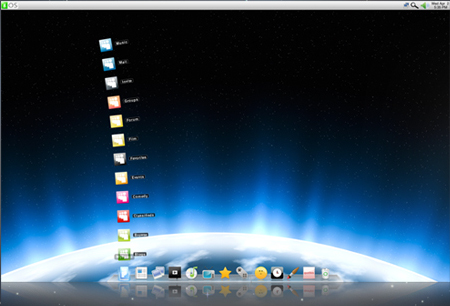 gOS, which standa for good OS, is based on Ubuntu and for the most part works very well. It is definitely something geared toward users that want basic apps readily available and accomplishes this with the iBar. Basically it is a 3D toolbar on the screen, much like the launcher I've seen on Macs. gOS Gadget's iBar has Google, Gmail, Firefox and Open Office icons, among others, for quick access. gOS Space on the other had is directed more towards the Myspace crowd. Instead of Google apps there are links to various Myspace apps as well as Firefox and Open Office.
While the networking and wireless worked great I had a few problems with both of these. The iBar is difficult to customize, every time I tried it crashed and the OS often glitched up causing the iBar or desktop icons to disappear. I tried it on my 10 year old's desktop and my laptop and the same thing happened on both. I really like the idea of this OS and if not for the problems it would likely be at the top of my list of favorites. I recommend trying it and if it works this would likely be the OS for someone new to Linux, I just didn't have good luck with it.
PCLinuxOS:
I really like PCLinuxOS. It came with pretty much everything I needed in the way of multimedia support "out of the box". Most distros require you to
 download DVD and MP3 codecs or download internet plug-ins but this OS is geared towards multimedia. It is KDE, very easy to navigate and easy to connect to your home network. I had no issues with this on desktops or laptops. I still have it installed on my 10 year old's desktop and there have been no problems. Definitely recommend this for ease of use and out of the box usability. Especially for a new user who just wants to play some music, watch some DVDs and do homework.
Linux Mint:
This is my favorite Linux distro and the one I dual boot on my desktop. It is based on Ubuntu, so it is Gnome(damn gnomes!), and is not that impressive at first glance. However like P
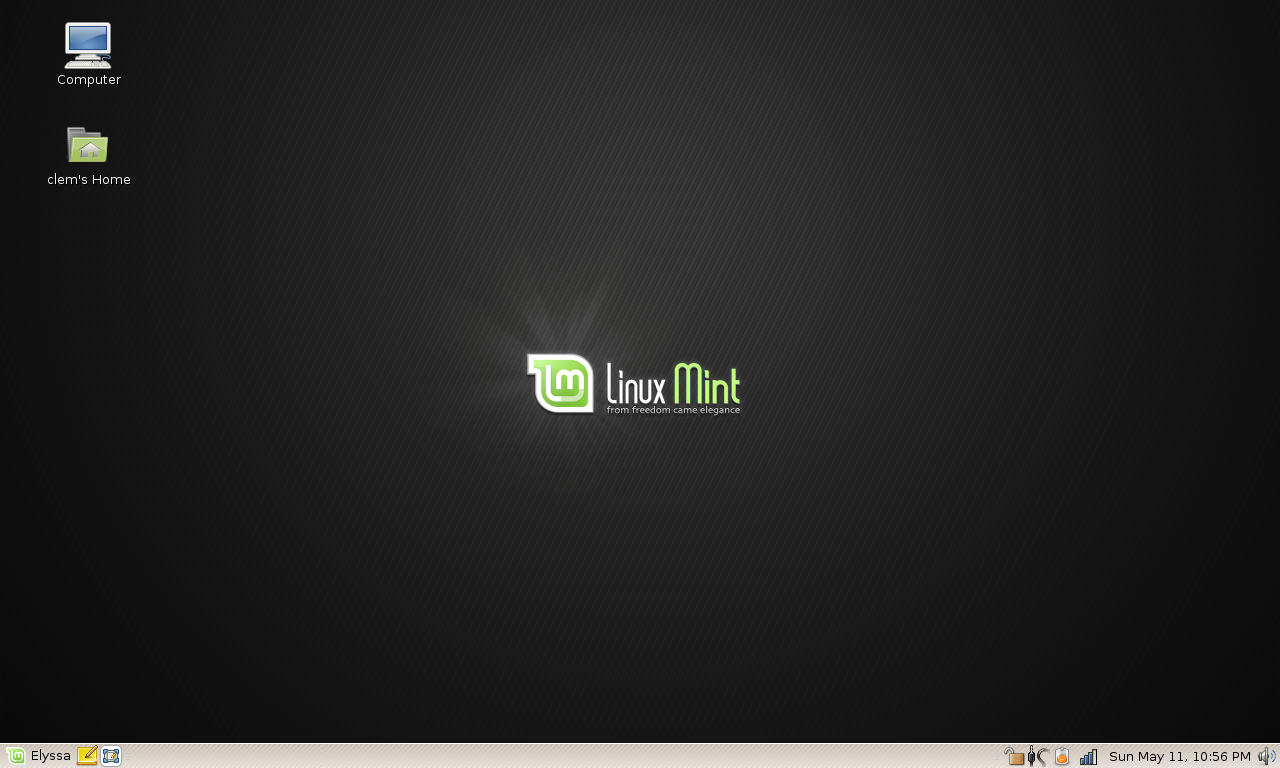 CLinuxOS everything I needed in regard to Multimedia was there out of the box, as was Open Office. It is easy to navigate and with the Mint Installer downloading and installing packages is a snap. I had no problems regardless of the machine I installed it on and setting up the network was no problem. It is a little easier to navigate than Ubuntu, which is nice for new users.
Sunday, October 5, 2008
My Top 10 Halloween Movies
Every holiday my family and I get a stack of movies together that celebrate the spirit of the season and watch them in the weeks leading up to the holiday. Anyone who read the old Geek Gazette e-zine, knows that I like to make lists, especially around the holidays. So to keep the tradition alive here are my Top 10 Halloween Movies.
I have many other favorites but these are 10 of my must watch movies for Halloween. Most of which I have used as inspiration for my Halloween games. Feel free to share your favorites as well.
I have many other favorites but these are 10 of my must watch movies for Halloween. Most of which I have used as inspiration for my Halloween games. Feel free to share your favorites as well.
- Young Frankenstien
- Halloween (original)
- Dawn of the Dead
- Dagon
- Nightmare on Elm Street
- In the Mouth of Madness
- Night of the Living Dead (original)
- Army of Darkness
- Ginger Snaps
- Silver Bullet
Thursday, October 2, 2008
Hey Palladium, I Have a Suggestion....
All of the talk recently about the Rifts RPG has got me to thinking. I like the game a lot, but have issues with the confusing manner in which the core book is set up. My players have also been reluctant to try it for this reason. While I've already mentioned that I would like to see an updated, better organized version of the rules I doubt that is going to happen.
So if anyone from Palladium is listening I have a serious suggestion that may give me and my group, along with a lot of other players from what I have heard, some of what we want without changing the system. Give us a pocket guide!
Nothing fancy, as a matter of fact the simpler the better. But what should be put in the pocket guide? Glad you asked, because here is how I think it would work best. Keep it small, about the size of paper back novel, so that it will fit in your back pocket. Include the obligatory Kevin Siembieda page just like most of the other Palladium books. I don't think the book needs it but I think Kevin likes writing them and as long as it is a new one I don't mind reading it.
Chapter 1
A maximum 5 page overview of the setting, for newer players. Nothing else just the basics, which honestly could be summed up in 1-2 pages. Leave out the "what is roleplaying stuff" and detailed descriptions of the world. The Pocket guide is supposed to be a quick reference for established player and to help new players, but it should be aimed towards people who own the core book. You should also include info about character stats here with a quick run down of character creation and alignment.
Chapter 2 - 6
Since the stats have already been covered these chapters should cover R.C.Cs(add a few to make a whole chapter), O.C.Cs, skills, psionics, and magic.
Chapters 7-12
Now use these chapters to cover gear, weapons, combat, healing/recovery, experience, M.D.C and S.D.C damage. Basically these chapters should cover what you need and how to play the game.
If there is room you can add a chapter for optional rules and it would be nice to have a few extra R.C.Cs or O.C.Cs as well. Keep the rules and descriptions clear and simple. This is not a book that is aimed at those wanting to learn the game, though it should be clear enough that it is possible to do so, but as I said before a quick reference guide. I also suggest that artwork be kept to a minimu to conserve space, but some charts/tables would be a nice addition as would a very good index. Leave out the GM information, though a second GM pocket guide would be a nice thing to have as well... but I'll save that idea for another time.
The main thing I am looking for in this book is that things be in the order you need them. If you are creating a character you should not have to skip from the front to the back of the book to find what you need, everything should be 1,2,3.. for ease of use.
Keep the page count to a minimum, the price low, and give me the ability to stick it in my back pocket for pickup games during trips, or for easy access during a regular game. Simple, easy to use, small and cheap. I'll pre-order 2 copies today....
So if anyone from Palladium is listening I have a serious suggestion that may give me and my group, along with a lot of other players from what I have heard, some of what we want without changing the system. Give us a pocket guide!
Nothing fancy, as a matter of fact the simpler the better. But what should be put in the pocket guide? Glad you asked, because here is how I think it would work best. Keep it small, about the size of paper back novel, so that it will fit in your back pocket. Include the obligatory Kevin Siembieda page just like most of the other Palladium books. I don't think the book needs it but I think Kevin likes writing them and as long as it is a new one I don't mind reading it.
Chapter 1
A maximum 5 page overview of the setting, for newer players. Nothing else just the basics, which honestly could be summed up in 1-2 pages. Leave out the "what is roleplaying stuff" and detailed descriptions of the world. The Pocket guide is supposed to be a quick reference for established player and to help new players, but it should be aimed towards people who own the core book. You should also include info about character stats here with a quick run down of character creation and alignment.
Chapter 2 - 6
Since the stats have already been covered these chapters should cover R.C.Cs(add a few to make a whole chapter), O.C.Cs, skills, psionics, and magic.
Chapters 7-12
Now use these chapters to cover gear, weapons, combat, healing/recovery, experience, M.D.C and S.D.C damage. Basically these chapters should cover what you need and how to play the game.
If there is room you can add a chapter for optional rules and it would be nice to have a few extra R.C.Cs or O.C.Cs as well. Keep the rules and descriptions clear and simple. This is not a book that is aimed at those wanting to learn the game, though it should be clear enough that it is possible to do so, but as I said before a quick reference guide. I also suggest that artwork be kept to a minimu to conserve space, but some charts/tables would be a nice addition as would a very good index. Leave out the GM information, though a second GM pocket guide would be a nice thing to have as well... but I'll save that idea for another time.
The main thing I am looking for in this book is that things be in the order you need them. If you are creating a character you should not have to skip from the front to the back of the book to find what you need, everything should be 1,2,3.. for ease of use.
Keep the page count to a minimum, the price low, and give me the ability to stick it in my back pocket for pickup games during trips, or for easy access during a regular game. Simple, easy to use, small and cheap. I'll pre-order 2 copies today....
Subscribe to:
Posts (Atom)